

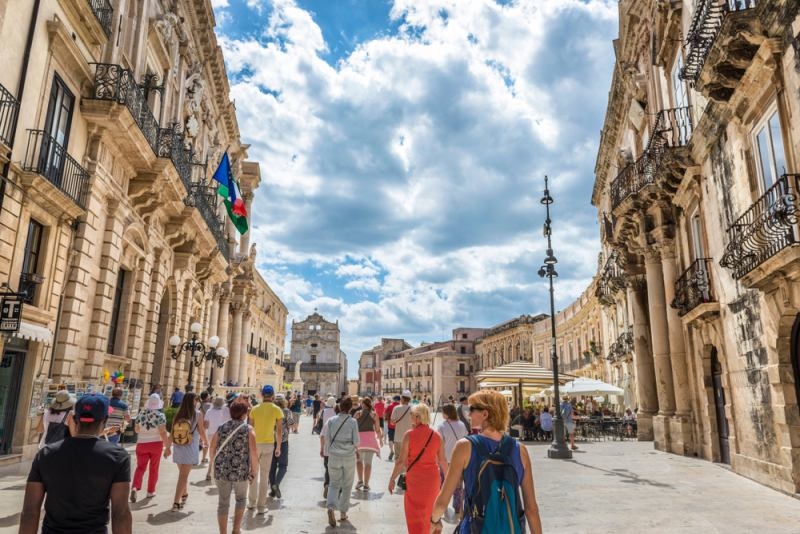
Sicily doesn’t stick to just one vibe. One minute you’re swept up in the energy of Palermo, the next you’re strolling quiet lanes in Noto, standing under volcanic skies near Etna, or sinking into complete relaxation at the sea. That mix is what makes picking your stops here so important. Some towns bristle with history or grand churches, others call you to the beach, or invite long, winding walks with no plan at all.
A great trip here isn’t about racing from highlight to highlight. You want variety—places that feel totally different from one another. That’s how your days stay interesting. That’s what keeps the journey from feeling like the same thing on repeat. So in this blog, we’ll help you find the spots that matter most, what makes each one special, and who will love them.
The best places to visit in Sicily depend heavily on what you want from the trip. A history-focused traveler may prefer Syracuse, while someone chasing coastal scenery could lean toward Taormina or Cefalù.
Palermo belongs high on any list of best places to visit in Sicily because it feels lived-in rather than staged for visitors. Its Arab-Norman architecture, busy markets, churches, and street food give the city a rough, energetic character.
Try arancina, panelle, or a classic cannolo while walking through the historic center. Palermo is also useful as a base for seeing nearby attractions. It is noisy. That is part of the charm.
Taormina is one of the most recognizable places to visit in Sicily, especially for first-time visitors. The town sits high above the Ionian Sea, with Mount Etna often forming the backdrop.
The ancient Greek Theatre is the major draw, but the appeal continues through Corso Umberto, small lanes, gardens, and viewpoints. It is polished compared with other Sicilian towns, so expect more visitors and higher prices.
Don't Miss: The Best Beautiful Coastal Towns For Your Next Big Trip
A useful Sicily travel guide should not treat every historic site as interchangeable. Sicily has Greek, Roman, Byzantine, Arab, Norman, Spanish, and Baroque influences. Each area tells a different story.
Syracuse is among the strongest places to visit in Sicily for travelers who want ancient history without spending the whole trip inside museums.
The archaeological park contains the Greek Theatre, Roman-era remains, and the famous Ear of Dionysius. Then move to Ortigia, the island-like historic center where limestone buildings, narrow lanes, piazzas, and the sea create a completely different mood.
Noto gives Sicily travel guide itineraries a beautiful change of pace. The city is known for its striking Sicilian Baroque architecture, particularly along Corso Vittorio Emanuele.
Golden limestone catches the light late in the day, making an evening walk especially good. Noto is smaller than Palermo or Catania, so it works well as a day trip or an overnight stop.
Sicily Italy travel becomes more interesting when cities are balanced with landscapes. The island has volcanic terrain, beaches, cliffs, farmland, and long stretches of coastline.
Mount Etna is one of the most memorable places to visit in Sicily because it changes the scenery completely. The active volcano dominates the eastern landscape, with lava fields, high-altitude terrain, vineyards, and hiking routes around its slopes.
Weather conditions can affect access, so flexibility helps. Even without a demanding hike, the volcanic landscape feels unlike the coastal towns.
Cefalù is a strong choice when Sicily Italy travel needs some downtime. The medieval old town sits beside a sandy beach, making it easy to combine sightseeing with a few lazy hours near the water.
The Norman cathedral is the major cultural landmark. Beyond it, narrow streets lead toward restaurants, shops, and the waterfront.
Suggested Reading: Historic European Towns That Feel Like A Fairytale Getaway
The most rewarding things to do in Sicily are not always major attractions. Food, markets, small towns, coastal drives, and everyday street life often create the memories that last.
Food should be treated as part of the itinerary, not an afterthought. Try pasta alla Norma in eastern Sicily, fresh seafood near coastal towns, street snacks in Palermo, and granita with brioche for breakfast.
A food market can tell you plenty about a city. Palermo's markets are especially lively.
One of the simplest things to do in Sicily is walk after the heat fades. Historic centers become busier with locals, restaurants fill up, and piazzas take on a different character.
Try walking without a destination for an hour. Ortigia, Noto, Taormina, and Cefalù are particularly suited to this.
Some Sicily tourist attractions deserve more time than a quick photograph. The trick is choosing a few major sites rather than stuffing every day with stops.
The Valley of the Temples near Agrigento is among the most impressive Sicily tourist attractions for ancient Greek architecture. The preserved temples sit across an archaeological landscape that feels much larger than expected.
Visit earlier or later in the day when possible. The combination of ruins, open landscape, and warm stone can be intense under the midday sun.
For another history-focused stop, Villa Romana del Casale near Piazza Armerina is worth considering. Its Roman mosaics provide a detailed look at elite life during antiquity.
The site is particularly useful for travelers who want something beyond temples and churches. The mosaics are the reason to go.
Also Read: Best Charming Small Towns USA for a Relaxing Vacation
The best places to visit in Sicily aren’t always the ones everyone posts about. Palermo wakes up messy and alive, not perfect but unforgettable. Taormina is gorgeous and a bit fancy. Syracuse quietly spreads ancient history into modern life, while Noto feels peaceful and timeless under its Baroque facades. Etna is in a class of its own, shaking up the whole landscape.
That’s the real power of traveling in Sicily. Don’t just stick close together on the map—mix it up. Blend big cities with coast, ruins with feasts, busy mornings with slow, unplanned nights. You’ll often stumble on your favorite moments somewhere between those famous stops anyway.
Absolutely, especially if you want history, food, beaches, and a local culture that’s pretty different from what you’ll find in northern Italy. Sicily stands alone—there’s a lot more going on here than the classic Rome–Florence–Venice circuit.
Sicily runs on euros. Big hotels, restaurants, and most shops take cards, but it’s smart to keep some cash handy for smaller cafes, markets, parking, or when you’re off the tourist path.
Tap water is treated and usually safe to drink, though how it tastes can change from town to town. In old buildings or if you’re unsure, bottled water’s sometimes a better bet—just check what your host suggests.
Think comfort—good walking shoes, clothes that breathe, sunglasses, sunscreen, and a light jacket for cooler evenings. Heading up Mount Etna? Bring serious shoes and layers, because it gets much chillier up there than anywhere near the coast.
Not always. If you’re sticking to main cities like Palermo, Catania, Syracuse, or Taormina, you’ll get by on trains and buses. If you want to see small villages, beaches far from the crowds, or just enjoy the freedom to wander, renting a car is the way to go.
This content was created by AI